Electric Motorcycles Are Expanding Indonesia’s Manufacturing Opportunity
Indonesia’s electric motorcycle market is still small, but the industry taking shape around it is worth paying attention to.
Out of the 6 to 7 million motorcycles sold in Indonesia each year, electric models account for only 60,000 to 70,000 units — barely 1 percent of the market. That’s about to get more attention.
In August 2026, the government rolled out Motor Listrik Nasional (Molinas), a program meant to build a domestic electric motorcycle ecosystem rather than just push sales of the vehicles themselves (Antara News).
Molinas covers batteries, components, charging and battery-swapping infrastructure, financing, distribution, and after-sales service. In other words, the real opportunity here isn’t the motorcycle — it’s everything that has to exist around it.
Growth Goes Beyond the Final Vehicle
Indonesia already has 69 companies producing battery-based electric two- and three-wheelers, with combined capacity of 2.511 million units a year. About 10 of them have met the domestic-content requirements to take part in Molinas (Antara News).
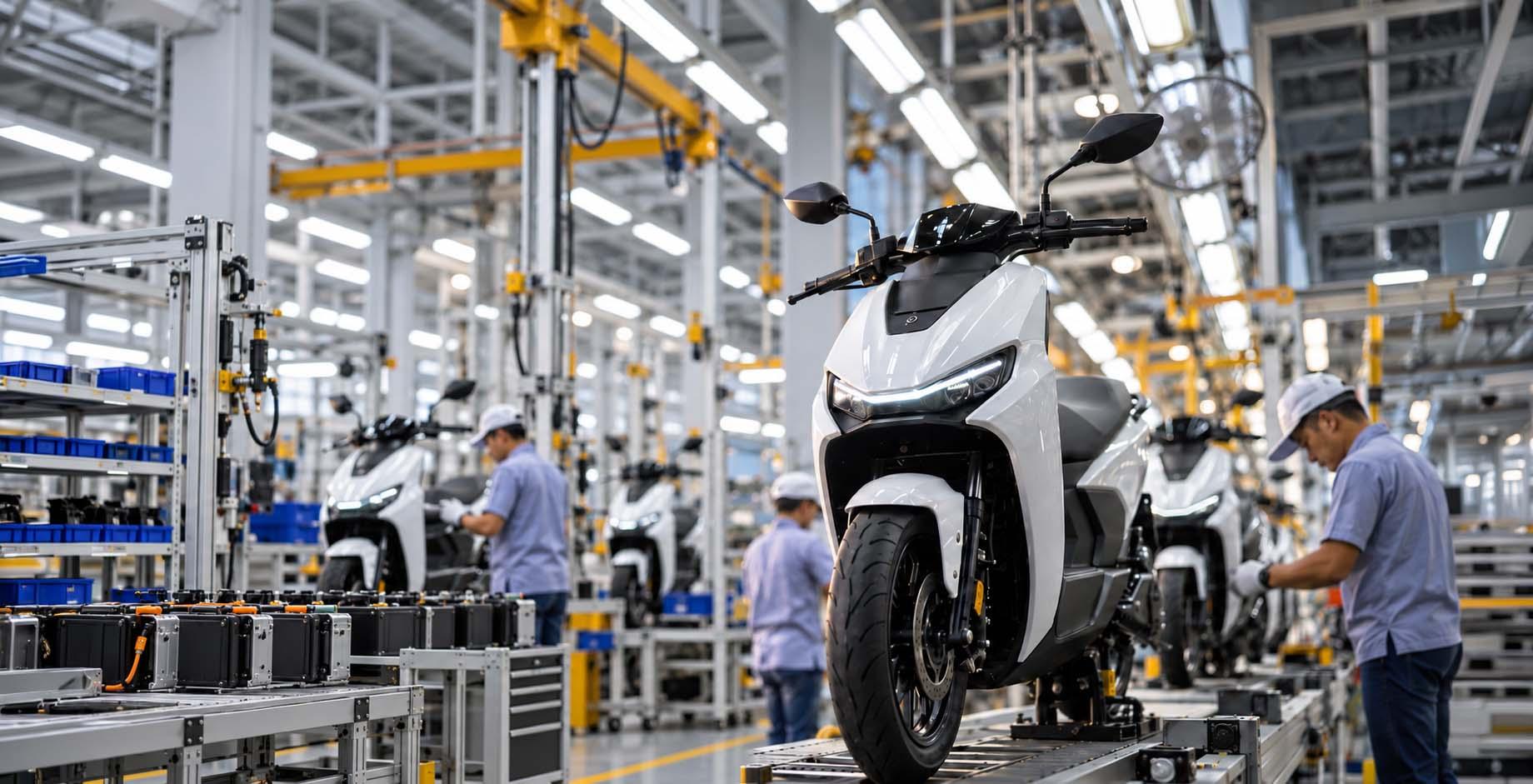
That still leaves plenty of room. An electric motorcycle industry doesn’t run on assembly lines alone — it needs battery systems, metal and plastic components, electrical parts, electronics, charging equipment, logistics, and maintenance services, among other things.
As the sector grows, so does demand across this entire supplier network, not just for the vehicles themselves.
Scaling Production Means Scaling the Supply Chain Behind It
One business group involved in the initiative has produced around 20,000 units so far. The government wants that number closer to 200,000, as part of a broader national target of 2 million electric motorcycles.
Getting from tens of thousands of units to that kind of volume changes what a manufacturer needs from everyone around it.
Suppliers need to deliver consistent quality at scale. Logistics has to keep materials moving without delays. Utilities need to stay reliable as output increases. Technical services and workforce capacity have to grow alongside production.
Adding capacity is the straightforward part — building a supply chain that can actually keep up is where most of the difficulty lives.
Why the Industrial Environment Matters
Manufacturing rarely stays contained to one facility for long. As volumes rise, so does everything around them: more suppliers, more logistics activity, higher utility demand, and eventually, more space.
For companies entering electric mobility, the industrial environment they operate in becomes part of that growth story.
Reliable utilities keep daily production moving. Strong connectivity makes it easier to move materials, products, and people. Being close to an established manufacturing ecosystem makes it easier to work with the right suppliers and adjust as needs change.
And having room to expand means manufacturers won’t need to rebuild their operational setup every time the business scales.
Where KAIH Fits In
Karawang Artha Industrial Hill (KAIH), located in West Karawang, is built around this need — bringing together industrial infrastructure, utilities, connectivity, and access to an established manufacturing base in one location.
Through 1ADAPT, tenants get support with utilities, licensing, and construction preparation as they set up and grow their facilities — the kind of groundwork that matters most in an industry still finding its footing.
Indonesia’s electric motorcycle industry still has a long way to go before it reaches the scale of the conventional motorcycle market. But that gap is where the opportunity sits.
The companies that come out ahead won’t just be the ones building more vehicles — they’ll be the manufacturers, suppliers, and supporting businesses that grow together as part of a stronger industrial ecosystem.