The manufacturing opportunity behind AI<br>infrastructure growth
16 October 2026 | . admin-artha
16 October 2026 | . admin-artha

AI has a physical side that is easy to overlook. Every deployment depends on buildings, electrical systems, cooling equipment, and the manufacturers who produce and deliver them.
For industrial companies, that raises a practical question. Where do existing production capabilities match what AI infrastructure needs, and what would it take to become a qualified supplier?
What the factory data shows
Reuters reported on 1 October 2026 that AI-related demand was helping support factory activity across Europe and Asia. Taiwan’s manufacturing Purchasing Managers’ Index reached 56.7 in September, and Indonesia also recorded expansion. The same report pointed to continuing cost pressures and uneven conditions from one country to the next. That is worth watching, but it does not show an AI-driven manufacturing boom in Indonesia.
The more useful question sits at the product and customer level: which infrastructure requirements can a given manufacturer realistically serve?
Where suppliers could fit
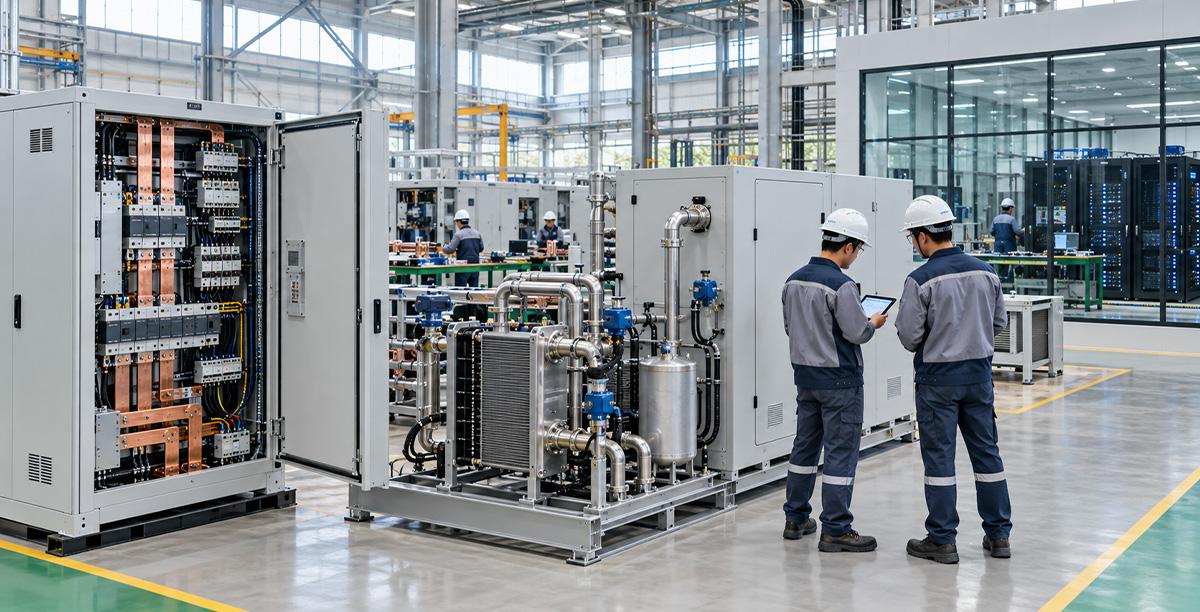
An AI data center is built from equipment that has to work as one system. Schneider Electric’s technical discussion explains how electrical distribution, uninterruptible power supplies, and liquid cooling relate to one another in facilities that run high-density computing.
For manufacturers, that points to entry points beyond semiconductor production. Electrical assemblies, cooling components, and equipment enclosures are worth checking against what customers actually require.
Being close to a growing market does not bring in orders by itself. A supplier has to understand the buyer’s specifications, procurement process, and reliability expectations. A company can have relevant fabrication or assembly experience and still need more engineering, testing, or quality control before it can supply a particular project.
What manufacturers should prepare
Start by tying the investment plan to a specific product opportunity. Before buying machinery or expanding a facility, a manufacturer should know what it intends to supply, who will buy it, and how the product will be approved.
Testing deserves attention early. Schneider Electric describes factory acceptance testing as a way to verify equipment performance before shipment, including whether components work together as intended. In practice, that means inspection, testing, documentation, and production should be planned together. Companies looking at this market should also check component availability, engineering skills, and the working capital needed to meet delivery commitments.
Expansion decisions should leave room for uncertainty. Confirmed customer requirements and achievable qualification milestones are a firmer basis for investment than headline growth alone.
Why the industrial environment matters
Preparation does not stop at the production line. The site also has to support building, testing, storing, and dispatching equipment.
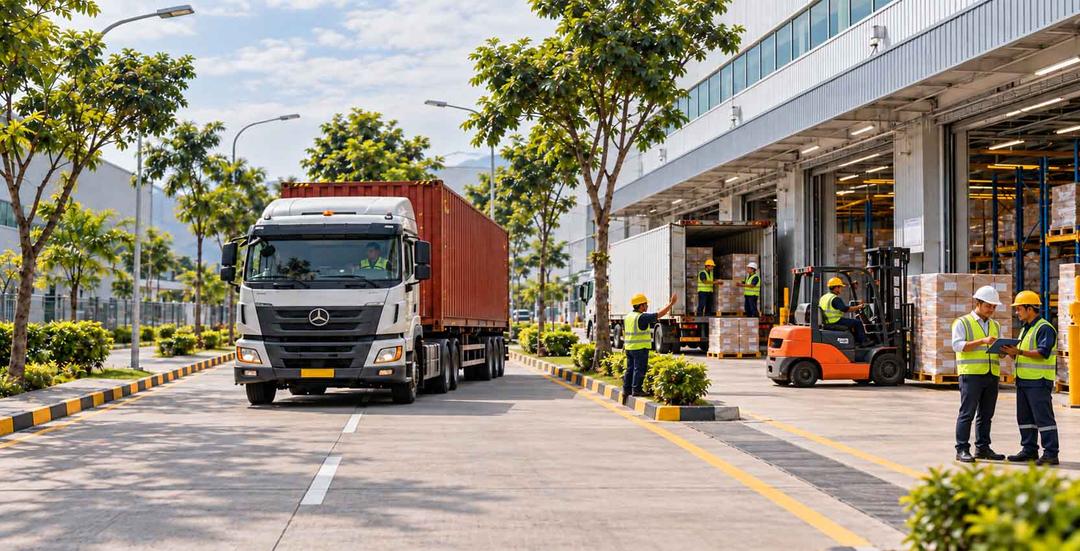
A company adding a new product range should check its utility requirements against the proposed machinery and testing processes. Internal vehicle access and loading arrangements need to suit the equipment being handled. Facility planning should also leave space for storage and inspection areas, and for production changes later on.
Coordination matters during setup and expansion. Utility connections, construction preparation, and operational requirements need to line up with the company’s schedule, so investors should look at how these will be managed before committing to a production start date.
Where KAIH fits in
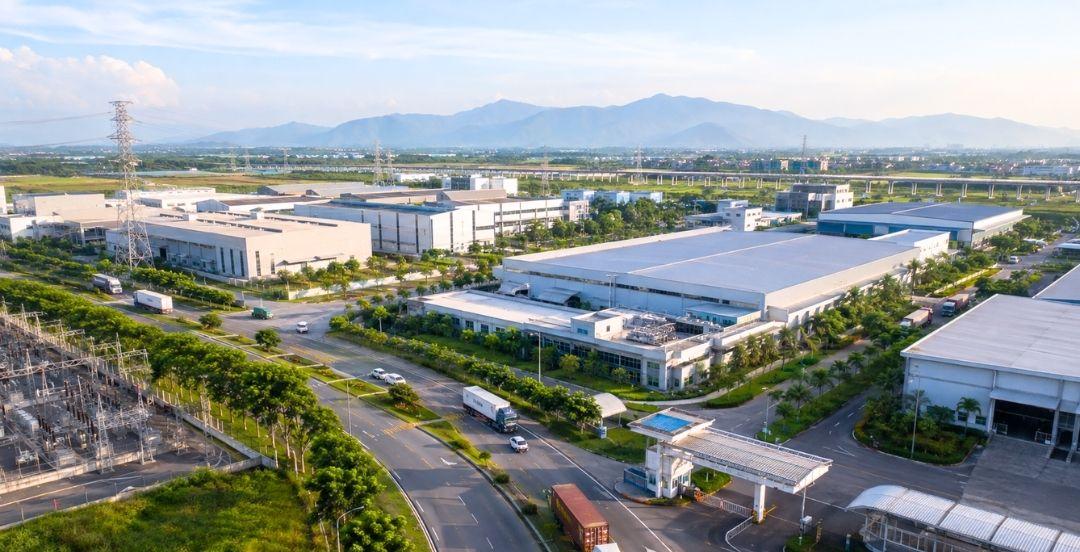
Karawang Artha Industrial Hill (KAIH), in West Karawang, has industrial utilities, an internal road network, and 1ADAPT tenant advisory support. For manufacturers comparing facilities, these give a starting point for discussing production requirements and coordinating utilities, licensing, construction, and operations. Whether they suit a particular company still depends on its process, equipment, and timeline.
KAIH’s role is to support the industrial preparation behind an investment. Product qualification, technical performance, and customer relationships remain the manufacturer’s own work.
Who benefits from AI infrastructure growth will depend on which companies can turn demand into reliable deliveries. For investors, the strongest expansion case pairs a credible customer with the technical capability and production planning to serve it, on a site that suits the work.
Source: Reuters, “Global factory activity boosted by AI spending boom,” 1 October 2026.
Additional source: Schneider Electric, “Building AI factories: Why integrated power and liquid cooling systems are critical for high-density AI data centers,” 9 April 2026.
Additional source: Schneider Electric, “‘Less is More’ Why fewer is better: How fewer partnerships de-risk data center builds for OEMs—and owners,” 2 September 2026.